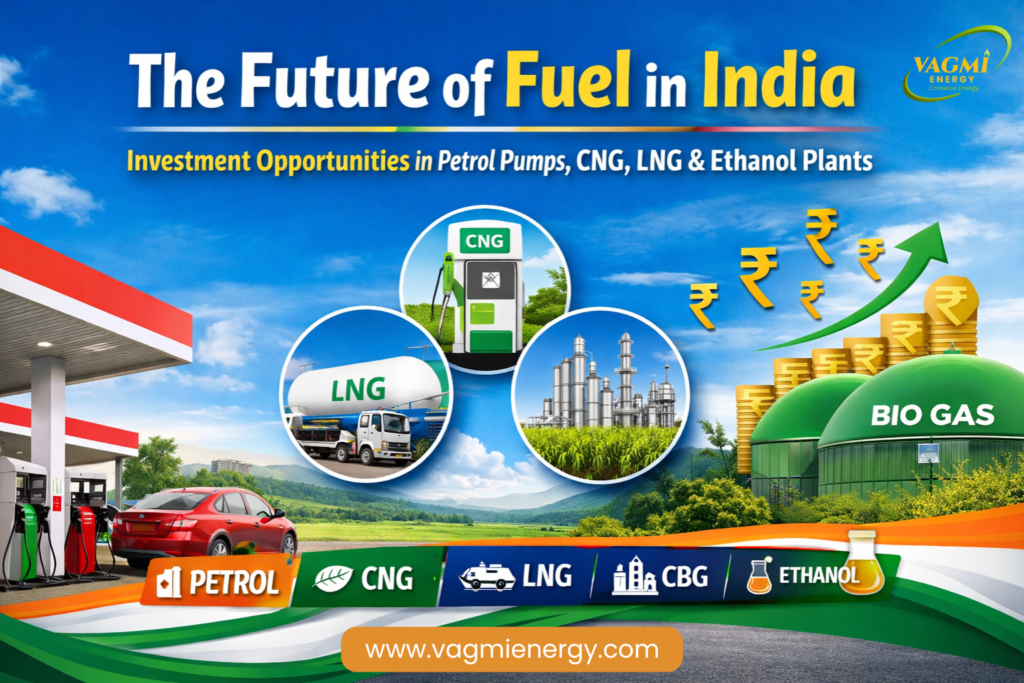
India’s energy sector is undergoing a major transformation. With rising fuel demand, strong government initiatives, and an increasing focus on clean and renewable energy, the fuel infrastructure sector has become one of the most promising investment opportunities in the country.
From Petrol Pumps and CNG Stations to LNG infrastructure, Compressed Bio Gas (CBG) Plants, and Ethanol Production Plants, India is building a diversified and sustainable fuel ecosystem.
Let’s explore why this sector is expanding and how investors can benefit.
Rising Demand for Fuel Infrastructure
India’s growing economy, expanding highway networks, and rising vehicle ownership are driving consistent demand for fuel. Petrol Pumps continue to be a stable and profitable business model due to steady consumption and strong backing from Oil Marketing Companies (OMCs).
However, setting up a petrol pump requires careful planning. It involves land feasibility, statutory approvals, safety compliance, funding support, and infrastructure setup. With the right guidance and structured approach, a petrol pump project can generate reliable long-term returns.
CNG and LNG: The Clean Fuel Shift
India is rapidly promoting clean energy under the City Gas Distribution (CGD) network. CNG stations are expanding across metro cities and smaller towns as more vehicles shift toward cleaner fuels.
Liquefied Natural Gas (LNG) is also gaining importance, especially for heavy commercial vehicles and long-distance transportation. Under the LCNG model, LNG is converted into CNG at the station, making it suitable for regions without pipeline connectivity.
This clean fuel transition presents a strong growth opportunity for investors who want to be part of India’s sustainable energy future.
CBG Plants: Renewable Energy with Rural Impact
Compressed Bio Gas (CBG) is produced from agricultural and organic waste. Supported by government initiatives like SATAT, CBG plants are emerging as an important part of India’s renewable fuel strategy.
CBG projects offer:
-
Sustainable and eco-friendly fuel production
-
Long-term supply agreements
-
Environmental benefits
-
Support for rural economy and waste management
CBG not only creates business value but also contributes to reducing carbon emissions and promoting circular economy practices.
Ethanol Production Plants: Strengthening Energy Independence
India’s ethanol blending program aims to reduce dependence on crude oil imports. As blending targets increase, demand for ethanol is growing steadily.
Ethanol Production Plants offer strong policy support, financial incentives, and long-term supply opportunities with oil companies. However, these projects require detailed feasibility studies, regulatory approvals, technology selection, and proper execution planning.
With the right technical and regulatory support, ethanol projects can become highly profitable and sustainable investments.
The Role of Expert Consultancy
Energy infrastructure projects are complex. They involve:
-
Land identification and feasibility analysis
-
Detailed Project Report (DPR) preparation
-
Government approvals and licensing
-
Environmental and safety compliance
-
Procurement of machinery and infrastructure
-
Construction and commissioning
Any delay or compliance issue can significantly impact project timelines and costs.
This is where professional consultancy becomes critical.
How Vagmi Energy Supports Energy Entrepreneurs
Vagmi Energy Private Limited (VEPL) specializes in end-to-end consultancy for Petrol Pumps, CNG Stations, LNG Stations under the LCNG model, CBG Plants, and Ethanol Production Plants across India.
The company provides structured support including feasibility assessment, due diligence, statutory approvals, DPR preparation, procurement guidance, and project execution assistance. With industry experience and strong understanding of regulatory processes, Vagmi Energy helps investors reduce risk and accelerate project development.
By combining technical knowledge, compliance expertise, and practical execution strategies, VEPL supports clients in building sustainable and profitable energy infrastructure.
Conclusion
India’s fuel sector is evolving toward a balanced mix of conventional and renewable energy solutions. Petrol Pumps provide stability, CNG and LNG support clean mobility, CBG promotes renewable fuel production, and Ethanol Production Plants strengthen national energy security.
For investors and entrepreneurs, this is the right time to enter the energy infrastructure sector. With proper planning, regulatory compliance, and expert consultancy support, these projects can deliver long-term growth and sustainable returns.
The future of fuel in India is not just about energy — it is about opportunity, innovation, and responsible development.